Black Holes Explained Without the Math: The Universe’s Most Mind Bending Monsters
What Exactly Is a Black Hole?
At its heart, a black hole is a place in space where gravity has gone completely wild. Picture taking something the size of our Sun and squishing it down smaller than a small city. The gravity becomes so intense that once you cross a certain boundary, nothing not light, not radio waves, not even you can ever climb back out.
It’s not a hole you can fall through like in cartoons. It’s more like an inescapable trap. The “black” part comes from the fact that we can’t see inside it. Light gets swallowed whole. But around the edges? That’s where the real fireworks happen glowing disks of superheated gas and jets shooting out like cosmic flamethrowers.
Scientists call this the ultimate victory of gravity over everything else in the universe. And the craziest part? These beasts aren’t rare. They’re scattered across the cosmos, quietly shaping galaxies.
How Black Holes Form (It’s Basically a Star’s Dramatic Exit)
Most black holes start their lives as massive stars think stars at least 8–10 times heavier than our Sun. These stars live fast and die young. When they run out of fuel, they can no longer fight their own gravity.
What happens next is one of the most violent shows in the universe: the star collapses in on itself in a supernova explosion. The outer layers blast outward in a brilliant light show, while the core keeps shrinking… and shrinking… until it becomes a black hole.
It’s like the universe’s way of saying, “Thanks for the light show now here’s your eternal gravity trap.”

Collapsing Star Gives Birth to a Black Hole | NASA Jet Propulsion Laboratory (JPL)
The Anatomy of a Black Hole: Three Key Parts You Need to Know
Every black hole has a few signature features that make it tick:
- The Event Horizon: This is the official “point of no return.” Cross this invisible line and you’re done. It’s not a physical surface it’s just the distance from the center where escape velocity hits the speed of light. Fun fact: from the outside, it looks like a perfect dark circle surrounded by a glowing ring of light.
- The Singularity: Right at the very center. Here, all the mass of the black hole is crushed into a single point of infinite density. Time and space as we know them basically break down. (Don’t worry we’ll never see it because the event horizon hides it forever.)
- The Accretion Disk and Jets: Matter doesn’t just fall straight in. It spirals around the black hole like water down a drain, heating up to millions of degrees and glowing brightly. Some of that material gets flung out in powerful jets along the poles.
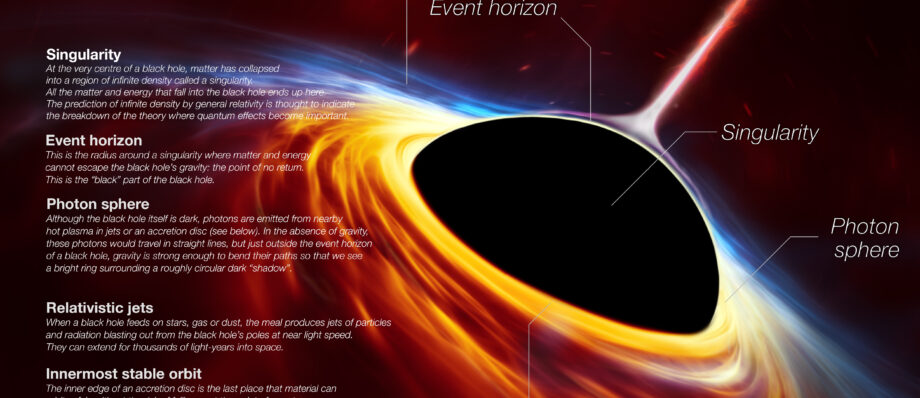
Here’s a clear visual breakdown of how it all fits together:
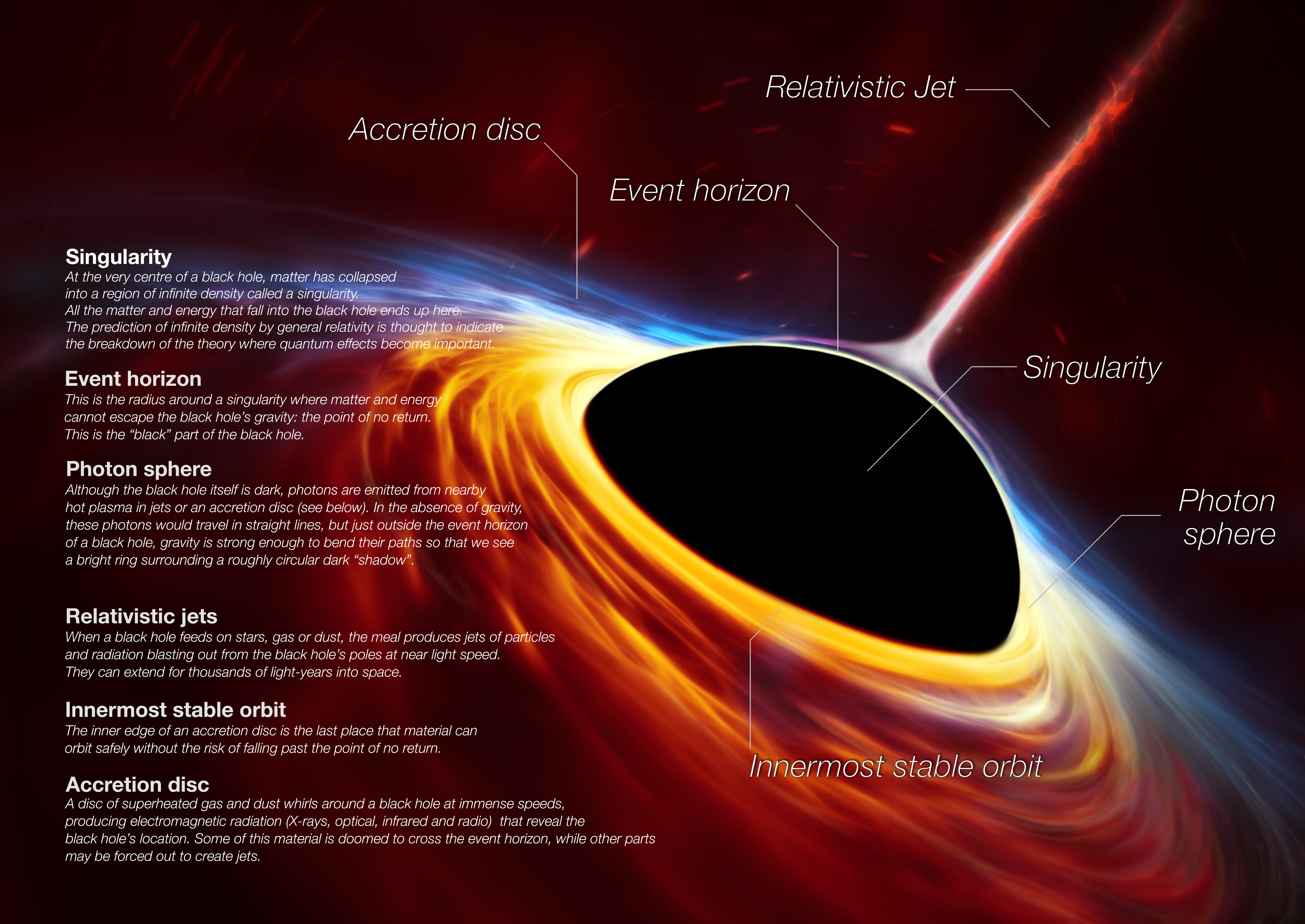
File:Anatomy of a Black Hole.jpg – Wikimedia Commons
Not One Size Fits All: The Different Types of Black Holes
Black holes come in different flavors depending on how they were born and how big they got:
- Stellar-mass black holes: These are the “small” ones, usually 5–100 times the mass of our Sun. They form from the collapse of individual massive stars and are scattered throughout galaxies.
- Supermassive black holes: These giants sit at the heart of almost every galaxy (yes, including ours). They can be millions or even billions of times the Sun’s mass. Nobody’s 100% sure how they grew so huge so fast, but they probably started small and gobbled up stars, gas, and even other black holes over billions of years.
- Intermediate and primordial black holes: These are rarer (or still theoretical). Some may have formed in the chaotic early universe, while others sit somewhere between stellar and supermassive.
Each type plays a different role in shaping the cosmos from ripping stars apart to anchoring entire galaxies.
Black Holes We’ve Actually “Seen”: Meet the Cosmic Celebrities
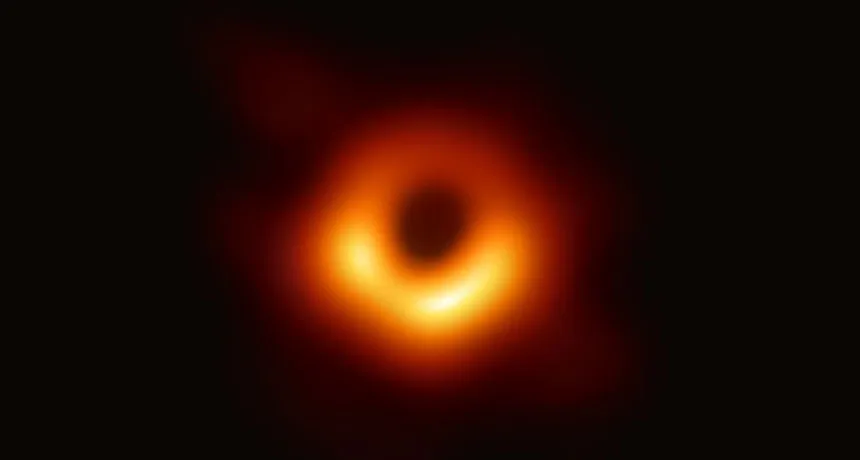
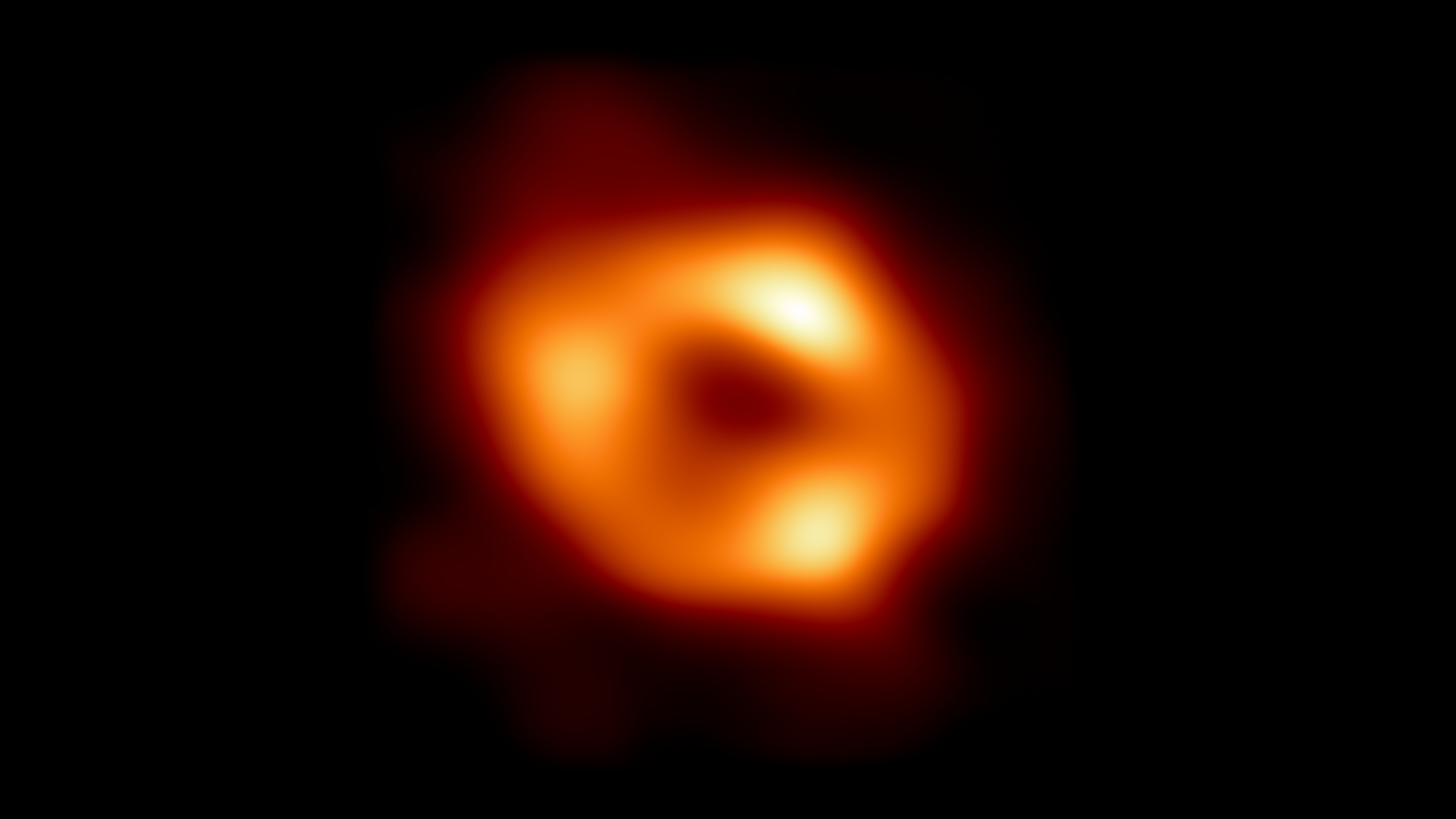
Thanks to incredible technology, we’ve now captured the first-ever direct images of black holes. These aren’t artist drawings they’re real data turned into pictures we can stare at in awe.
The supermassive black hole at the center of the galaxy M87 looks like a glowing orange donut with a perfectly dark center. And right here in our own Milky Way, Sagittarius A* (pronounced “A-star”) sits quietly 26,000 light-years away, doing the same thing on a slightly smaller scale.
These images proved what scientists had predicted for decades: black holes really do cast a “shadow” exactly as Einstein’s theory of gravity suggested.
What Happens If You Fall Into a Black Hole? (Spoiler: It’s Not Pretty)
Let’s play the ultimate “what if” game. You’re an astronaut drifting too close.
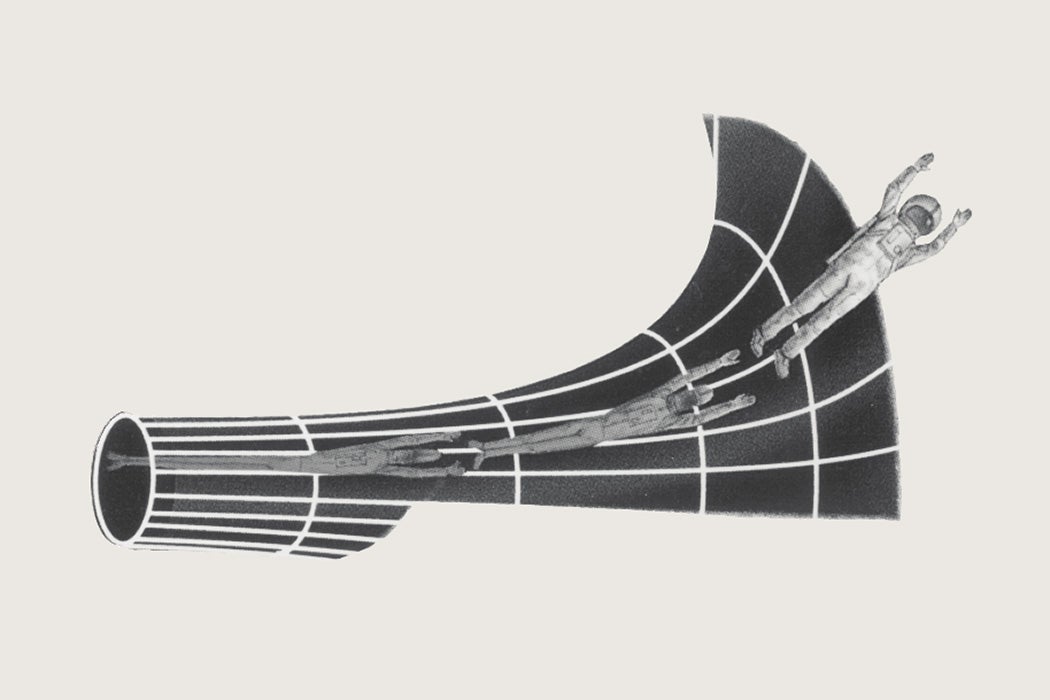
From your perspective, things might feel strangely normal at first… until the gravity starts pulling harder on your feet than your head. You get stretched like a piece of spaghetti (scientists literally call this spaghettification). Your body is torn apart atom by atom long before you reach the singularity.
From an outside observer’s view? You’d appear to slow down and freeze at the event horizon, fading into red as time itself seems to stretch. Wild, right?
Spaghettification”: How Black Holes Stretch Objects into Oblivion – JSTOR Daily
Do Black Holes Last Forever? The Hawking Radiation Surprise
Here’s the plot twist that even Stephen Hawking didn’t see coming at first: black holes aren’t completely black. They very, very slowly leak tiny particles of energy into space a process called Hawking radiation.
Over insanely long timescales (way longer than the current age of the universe), even the biggest black holes will eventually shrink and evaporate in a final burst of energy. So yes, even these cosmic monsters have an expiration date.
Why Black Holes Matter to Every One of Us
Black holes aren’t just cool space oddities. They help us understand gravity, time, and the very fabric of reality. They power the brightest objects in the universe (quasars), drive galaxy evolution, and even give us clues about what might happen when quantum physics meets gravity.
They remind us how little we still know and how much wonder is left to explore.
So… What Do You Think?
Black holes explained without the math still blow your mind, don’t they? They’re equal parts terrifying and beautiful proof that the universe is far stranger and more incredible than we ever imagined.