
When to Repair vs Replace Your Vehicle: The Ultimate Guide to Smarter Decisions
Deciding when to repair vs replace your vehicle is one of those classic driver dilemmas that hits everyone eventually. It’s not just about dollars it’s about safety, reliability, stress levels, and what your car truly means to you. Let’s break it down in plain English so you can make a confident call without the guesswork (or the regret).

Who Is Responsible for a Defect After You Buy a Car? – Autotrader
The Famous 50% Rule: Your Fast Financial Check
Mechanics and money experts often point to a simple benchmark called the 50% rule. If the repair cost is more than half of what your car is currently worth, it’s usually smarter to replace it.
For example:
- Your 8-year-old sedan is worth $6,000 on the used market.
- The transmission repair quote comes in at $3,800.
- That’s over 50% of its value → time to start browsing replacements.
But here’s the real talk: this rule isn’t set in stone. If your car has been rock-solid for years and this is a one-off issue, many drivers happily bend it. On the flip side, if your vehicle is over 10 years old or has 150,000+ miles and multiple systems are failing, even a 30% repair might signal it’s time to move on.
Pro tip: Grab a free online valuation from sites like Kelley Blue Book or Edmunds before you decide. Knowing the actual number takes the emotion out of it.
Breaking Down the Cost of Car Ownership | AAA Automotive
Beyond Dollars: The Real Factors That Matter Most
Money is important, but it’s rarely the only story. Here are the big-picture questions every driver should ask when weighing repair vs replace your vehicle.
1. Is Your Car Still Safe?
Safety isn’t negotiable. Worn brakes, bald tires, failing suspension, or airbag issues can turn a minor inconvenience into a dangerous situation. Newer vehicles come with modern features like automatic emergency braking, blind-spot monitoring, and better crash protection that older models simply don’t have.
If your mechanic flags anything that compromises safety, lean toward replacement—or at least get those critical fixes done immediately.
2. How Reliable Is It, Really?
Ask yourself: How often is this car in the shop? One major repair a year might be manageable. But when you’re dealing with transmission and AC and electrical gremlins in the same 12 months? That’s a pattern, not bad luck. Frequent breakdowns kill your time, your schedule, and your peace of mind.
3. Age, Mileage, and the “What’s Next?” Factor
Cars don’t suddenly die at a certain point, but they do start needing more attention around the 10-year or 150,000-mile mark. The question isn’t just “Can I fix this?”—it’s “What’s going to break next month?” If you’re staring down a laundry list of upcoming maintenance, replacement often starts looking like the smarter long-term play.

A man working on a car engine in a garage photo – Transportation Image on Unsplash
4. The True Cost of Ownership
Repairing keeps your monthly payments at zero (huge win if your current car is paid off). But replacing brings new perks:
- Better fuel efficiency
- Lower insurance in some cases
- Warranty coverage
- Modern tech and comfort
Don’t forget hidden costs of a new (or newer) car: higher insurance, registration fees, and that initial depreciation hit. Sometimes the “cheap” repair ends up costing more over time.
5. The Emotional Side (Yes, It Counts)
Some cars have stories. Maybe it’s the one that got you through college or survived a cross-country move. Sentiment has value but it shouldn’t override safety or financial reality. Be honest with yourself about whether attachment is clouding your judgment.
Real-Life Moments That Make the Decision Clear
I’ve heard countless stories from drivers facing this exact fork in the road:
- The commuter whose 2015 sedan needed a $3,600 engine repair. After crunching numbers, they realized a reliable used replacement with a warranty made more sense than gambling on future breakdowns.
- The family hauler with 180,000 miles that passed safety inspections but kept nickel-and-diming them with small fixes. They finally traded it in when repair bills topped what a newer model’s monthly payment would cost.
These aren’t hypotheticals, they’re the everyday realities that show when to repair vs replace your vehicle is deeply personal.
Is Your Car Totaled If the Airbags Deploy? A Clear Guide
Quick Pros & Cons Cheat Sheet
Repairing your vehicle:
- Lower upfront cost
- Keeps your current car (and its familiarity)
- Avoids new-car depreciation
- Great if it’s otherwise solid
Replacing your vehicle:
- Fresh reliability and safety features
- Better fuel economy and lower long-term maintenance
- Warranty peace of mind
- Modern features you’ll actually use
Your Step-by-Step Decision Checklist
Ready to decide? Run through this simple process:
- Get a professional diagnosis and written estimate.
- Look up your car’s current market value.
- Calculate the 50% rule (and adjust for age/mileage).
- List upcoming repairs you know are coming.
- Factor in non-financial stuff: safety, reliability for your lifestyle, and how the car makes you feel.
- Talk to a trusted mechanic, they see this every day and can give honest advice.
- Sleep on it. Big decisions deserve a clear head.
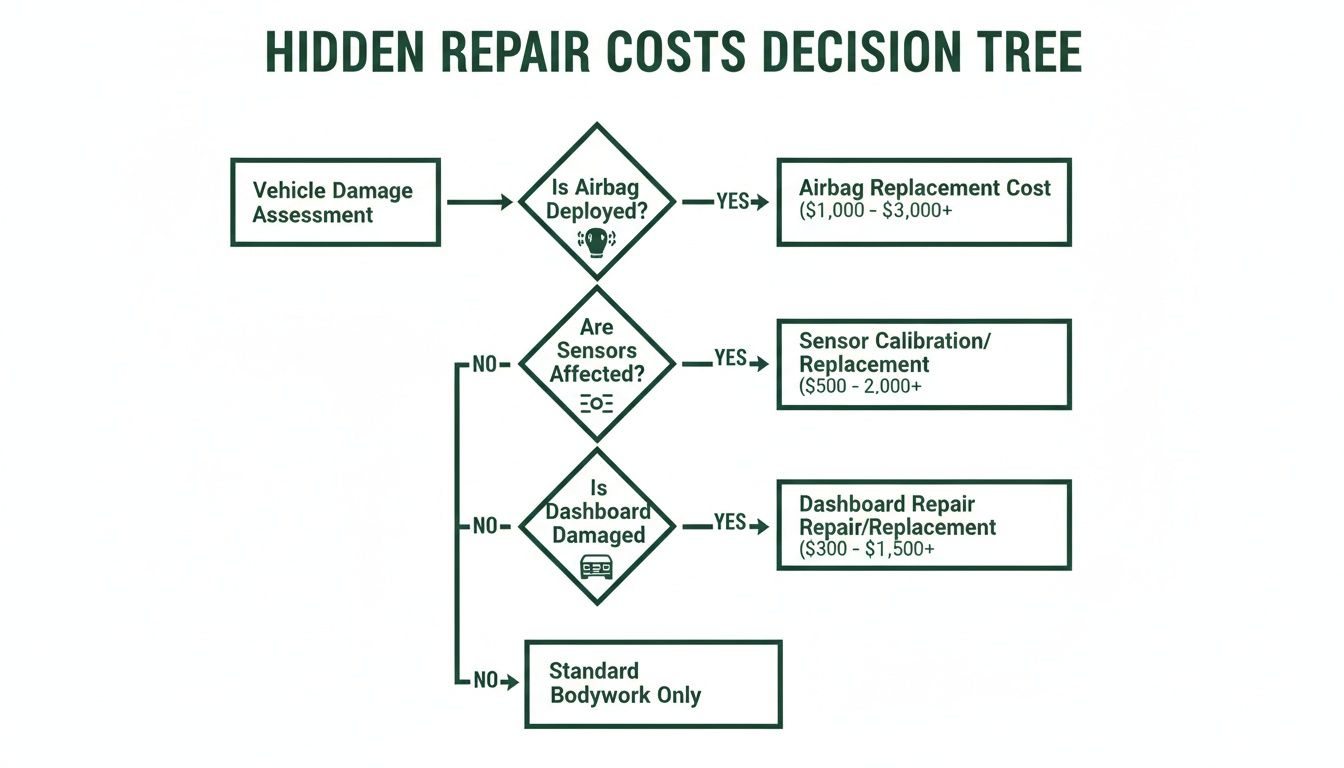
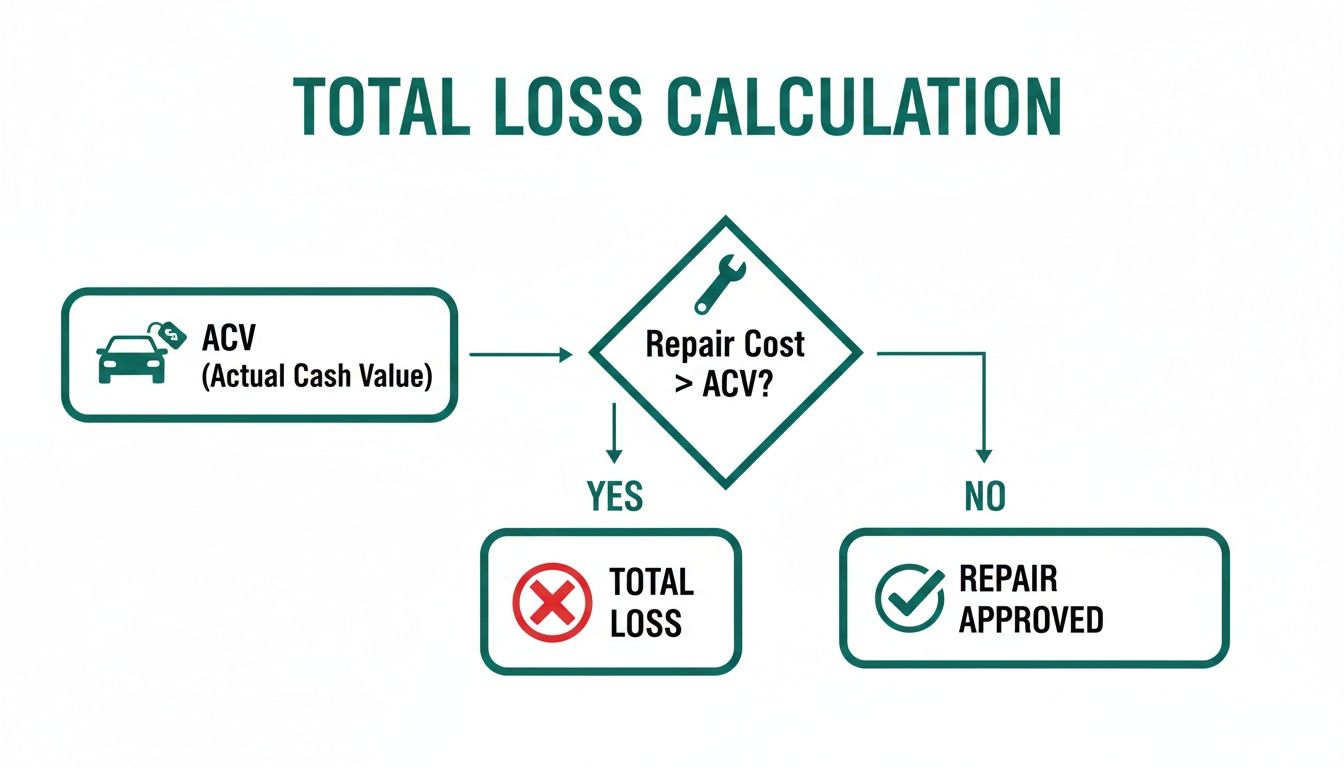
Bonus: Print out or screenshot a simple decision tree like the one below to keep things visual.
Calculating Total Loss Vehicle Value: A Guide for Car Owners
The Bottom Line: There’s No One-Size-Fits-All Answer
When to repair vs replace your vehicle comes down to balancing cold hard numbers with your real-life needs and gut feeling. Sometimes the smartest move is fixing what you’ve got. Other times, saying goodbye opens the door to something better, safer, and more enjoyable.
The key? Stay informed, get solid quotes, and remember: your time, safety, and sanity are worth protecting too.