
Life Beyond Earth: What Science Says So Far, The Latest Clues from JWST, Mars, and Beyond
The Hunt in Our Own Solar System: Closer Than You Think
We don’t have to look light-years away to find promising spots. Right in our neighborhood, a few worlds stand out as potential habitats.
Mars: Ancient Rivers and Potential Biosignatures NASA’s Perseverance rover has been exploring Jezero Crater, an ancient lakebed, and in 2024 it found a rock nicknamed “Cheyava Falls” with intriguing “leopard spots” small mineral deposits that on Earth are often linked to microbial activity. The rover also detected organic molecules in several samples. These aren’t proof of past life, but scientists call them potential biosignatures. The samples are sealed for a future return mission to Earth, where labs can run detailed tests.

Perseverance Finds a Rock With ‘Leopard Spots’ | NASA Jet Propulsion Laboratory (JPL)
Mars once had rivers, lakes, and a thicker atmosphere. If life existed there billions of years ago, the clues are waiting.
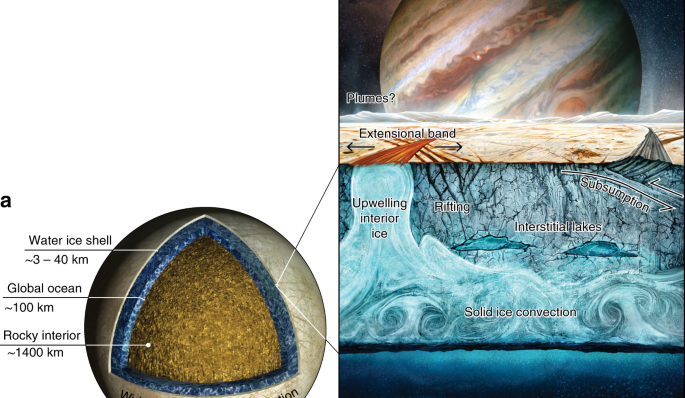
Icy Moons: Hidden Oceans on Europa and Beyond Jupiter’s moon Europa and Saturn’s Enceladus are even more tantalizing. Both have vast subsurface oceans of liquid water beneath thick ice shells environments that could support microbial life. Europa Clipper, which launched in late 2024, is now on its way to fly by Europa dozens of times, mapping its ice, searching for plumes of water vapor, and analyzing surface chemistry. Early data from previous missions already suggest chemical energy sources that life could use.
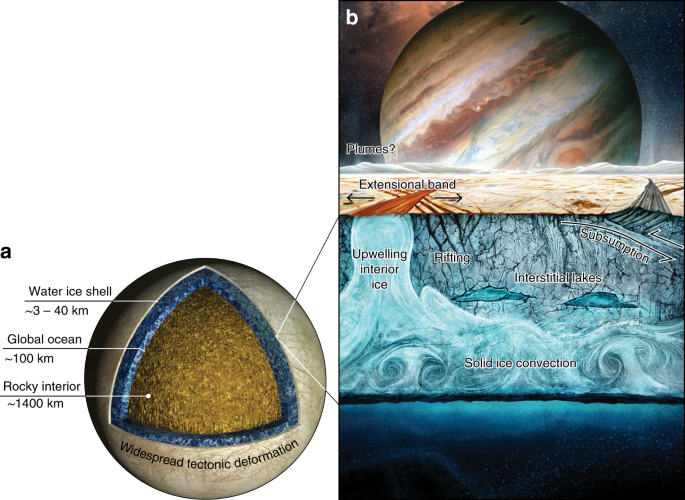
NASA’s Europa Clipper a mission to a potentially habitable ocean world | Nature Communications
These moons show that habitability doesn’t require a surface like Earth’s, just the right ingredients and energy.
Exoplanets: Thousands of Worlds, a Handful of Standouts
Most of the buzz these days comes from planets orbiting other stars. Thanks to telescopes like Kepler and now JWST, we’ve confirmed over 6,000 exoplanets. Not all are Earth-like, but a recent 2026 study narrowed it down to just 45 rocky worlds that look especially promising for life.
JWST’s Game-Changing Views JWST is revolutionizing the search by analyzing exoplanet atmospheres as planets pass in front of their stars. In 2025, astronomers reported the strongest hints yet of possible biological activity on K2-18b, a “Hycean” world (ocean-covered with a hydrogen-rich atmosphere) 124 light-years away. They detected dimethyl sulfide (DMS) and possibly dimethyl disulfide gases produced on Earth almost exclusively by marine phytoplankton. While abiotic explanations can’t be ruled out yet, it’s the most exciting biosignature signal we’ve seen.
Webb Detects Possible Biosignature Gases in Atmosphere of K2-18b | Sci.News
JWST is also spotting water vapor, methane, and carbon dioxide on other worlds, helping us understand which atmospheres might support life.
The Search for Intelligent Life: SETI and the Big “Where Is Everybody?”
Microbial life feels increasingly plausible, but what about intelligent civilizations? The Search for Extraterrestrial Intelligence (SETI) listens for radio signals or laser pulses with giant telescopes. So far, silence but that doesn’t mean nothing’s out there.
The Fermi Paradox asks the classic question: if intelligent life is common, why haven’t we seen evidence of it? The Drake Equation tries to estimate how many communicative civilizations might exist in our galaxy by plugging in factors like star formation rates and the fraction of planets that develop life. Both highlight how vast the universe is and how early we are in our search.

Massive Radio Array to Search for Extraterrestrial Signals from Other Civilizations
Future telescopes and missions could change everything. Projects like the Habitable Worlds Observatory aim to directly image Earth like planets and scan their atmospheres for oxygen, methane, or other telltale signs.
What This All Means for Us Right Now
Science hasn’t found aliens yet, but the pace of discovery is accelerating. Every new exoplanet, every rover sample, every JWST spectrum brings us closer to answering one of humanity’s biggest questions. The data so far suggests the ingredients for life water, organic molecules, energy are common across the cosmos.
That doesn’t guarantee neighbors, but it makes the possibility feel real. And even if we ultimately find we’re alone, the search is teaching us about our own planet’s uniqueness and the fragility of life here.
We’re living in a golden age of astrobiology. Missions launching in the coming years will give us even sharper eyes on distant worlds.